
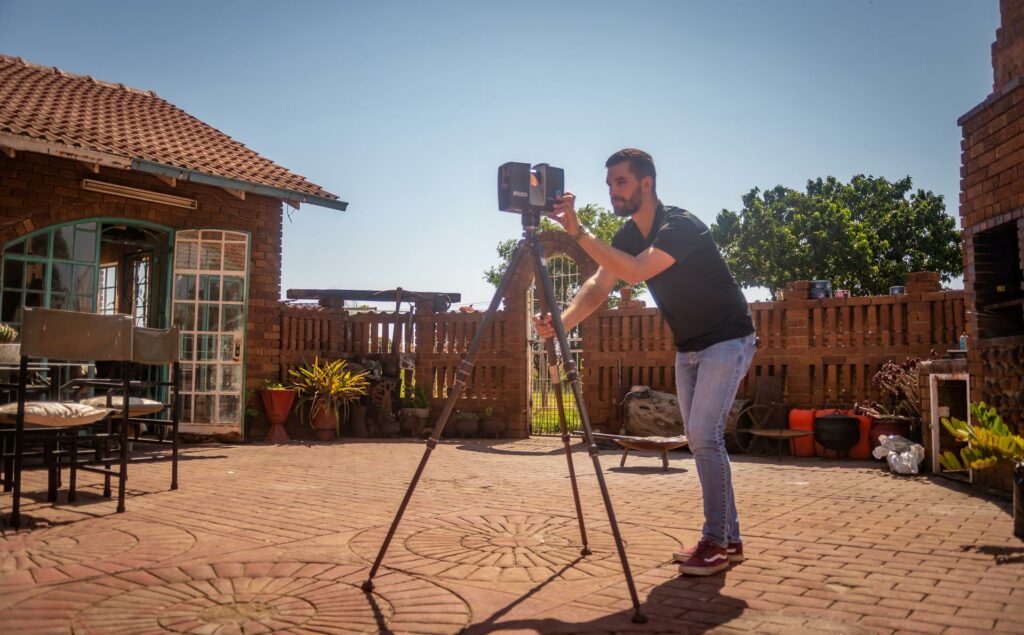
Architects recognize the crucial role building surveys play in the design process. These surveys serve as a foundation for gathering information about a building’s existing conditions, vital for creating precise plans and designs. However, conventional surveying methods often prove time-consuming, costly, and prone to inaccuracies. Hence, architects should consider integrating laser scanning for measured building surveys, and here’s why:
Accurate Data Collection:
Laser scanning offers a precise method of data collection, capturing a comprehensive and detailed 3D point cloud of the building. Within minutes, the scanner records millions of points, furnishing architects with a model of the building’s geometry. This granular information becomes instrumental in generating highly accurate drawings and models essential for precise design execution. With laser scanning, architects can discern even the subtlest deviations from the original design, ensuring accuracy for restoration or reconstruction purposes.
Time and Cost Savings:
Laser scanning presents a swift and cost-effective approach to acquiring accurate building data. Unlike traditional surveying methods that rely on labour-intensive manual measurements, laser scanning expedites the data collection process while reducing overall surveying costs. Architects benefit from significant time and financial savings as this technology enables swift and efficient data gathering. Compared to conventional methods, laser scanning enables architects to complete surveys in a fraction of the time, affording more focus on the design aspect.
Improved Communication:
Laser scanning promotes improved communication between architects and clients. The intricate 3D point cloud model generated by the scanner can be shared with clients, offering them a clear and detailed visual representation of the building’s conditions. This comprehensive insight empowers clients to make well-informed decisions regarding design alterations. Moreover, sharing the 3D point cloud model with other stakeholders, such as contractors, engineers, and building owners, ensures a cohesive understanding of the building’s conditions, promoting effective collaboration throughout the project lifecycle.
Improved Safety:
Laser scanning also prioritizes safety during the surveying process. Unlike traditional methods that may involve physical contact with the building, laser scanning can be conducted remotely, mitigating the risk of injury to surveyors. This remote capability ensures the safety of surveyors and other personnel on-site, contributing to a secure working environment.
Architects stand to benefit greatly from embracing laser scanning for measured building surveys. This technology streamlines data collection, saves time and resources, enhances communication, and elevates safety standards during the surveying process. By leveraging laser scanning, architects can efficiently gather accurate data, enabling informed design decisions and ultimately contributing to superior project outcomes.